School cleaning needs a practical balance between everyday soil removal, safe access and the rhythm of the school day. Classrooms, toilets, corridors and staff facilities have different patterns of use and should not share an undifferentiated task list.
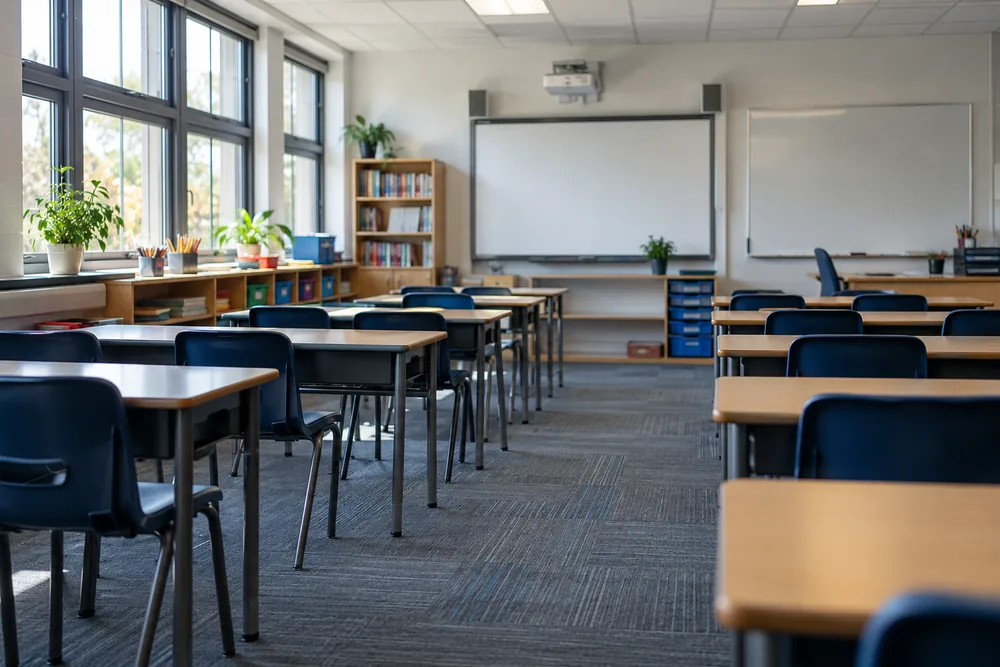
What The Service Covers
Our school cleaning service in Manchester begins with an agreed specification. The aim is to leave the areas included in your proposal clean and usable, without treating every surface as if it needs the same approach.
A useful starting scope includes:
- Classrooms, circulation routes and communal spaces, with attention to frequently touched surfaces.
- Toilets, handwashing areas and staff facilities using separate equipment for different hygiene zones.
- Agreed dining-area surface cleaning, coordinated with the school’s food handling arrangements.
- Periodic work during holidays or closures, with furniture access and drying time agreed in advance.
When To Review Your Cleaning
Cleaning removes dirt and contamination. Disinfection is a separate step when indicated, using an appropriate product and its specified contact time. UKHSA guidance for education settings supports a documented cleaning schedule and suitable handling of body-fluid contamination.
Agree safeguarding and visitor arrangements with the school before attendance. The school must decide the vetting and supervision requirements for the role, rather than relying on a generic claim that all cleaners have the same checks.
Consider a review when occupancy changes, a lease begins, a contractor hands over a building or the existing routine repeatedly misses the same areas. A new attendance pattern can be more useful than simply adding time to a method that does not suit the premises.
A Practical Process
First, share the business postcode, premises use and the result you need. Note any time restrictions, sensitive surfaces or problems that have persisted under the current arrangement.
Next, the scope and access conditions are assessed. A visit may be needed where photographs and a floor plan do not explain the condition, working environment or equipment access well enough.
The proposal should identify the tasks, frequency, equipment, products and exclusions. Agree the safe method and any separation from staff, visitors or operations before attendance starts.
During the work, the agreed zones and access rules guide the sequence. At handback, check the listed tasks and raise any missed items against that specification, then review the programme if the premises use changes.
Safety And Relevant Guidance
The Workplace (Health, Safety and Welfare) Regulations 1992 set requirements for workplace cleanliness. The standard and frequency need to reflect the use of the premises. Hiring a contractor is one way of arranging the work, rather than a legal requirement in itself.
The Control of Substances Hazardous to Health Regulations 2002, commonly called COSHH, matter when cleaning products or contamination present health risks. Product choice, dilution, handling and exposure controls belong in the assessment, rather than being left to a bottle label alone.
Wet floors and trailing cables can create hazards during cleaning. The method should keep people away from affected areas until they are safe to use. Read HSE guidance on cleaning and slip prevention and COSHH guidance for cleaners.
For education settings, use the UKHSA infection prevention guidance alongside the school’s own risk assessment and safeguarding procedures.
What Affects The Cost
The price depends on the tasks and the time needed to carry them out safely. Area, room layout, fixture numbers, current condition and the type of finish all influence the amount of work.
Access windows, parking or loading restrictions, equipment storage and whether areas remain occupied can also change the method. Consumables, periodic treatments and specialist waste arrangements should be shown separately where they are outside the routine.
Compare proposals against the same task list rather than a headline figure. Ask which tasks happen on each visit, which are periodic and how extra work is authorised, so that price comparisons reflect the service you intend to buy.
Service Boundaries
Outbreak response, body-fluid incidents, clinical waste and food preparation equipment need explicit procedures. Do not treat an ordinary classroom clean as a guarantee against infection or a substitute for the setting’s wider infection-control measures.
For a wider programme, return to commercial cleaning Manchester or compare the related services below. Use the enquiry form to explain the business setting and what you want included.
Common Questions
Can School Cleaning Be Arranged During The Holidays?
School cleaning during the holidays can allow access to rooms and floors that are difficult to close during term. Provide the caretaker’s access arrangements, contractor dates and any furniture moves before agreeing the programme. Drying, ventilation and safe storage still matter, even when pupils and teaching staff are away.
How Much Does Commercial Cleaning In Manchester Cost?
Commercial cleaning in Manchester is priced from the scope, frequency and conditions of the work. Floor area alone does not show how long washrooms, desks or difficult access will take. Share your opening times, surface types and existing issues so the proposal can explain routine labour, equipment, supplies and any separately priced periodic tasks.
What Information Should I Include In An Enquiry?
A cleaning enquiry should include the business postcode, premises type, service needed and preferred working hours. Describe the rooms, floor finishes and any access restrictions or recurring problems. Avoid sending access codes, confidential documents or sensitive personal information through the form, and explain whether you need a recurring schedule or a single visit.